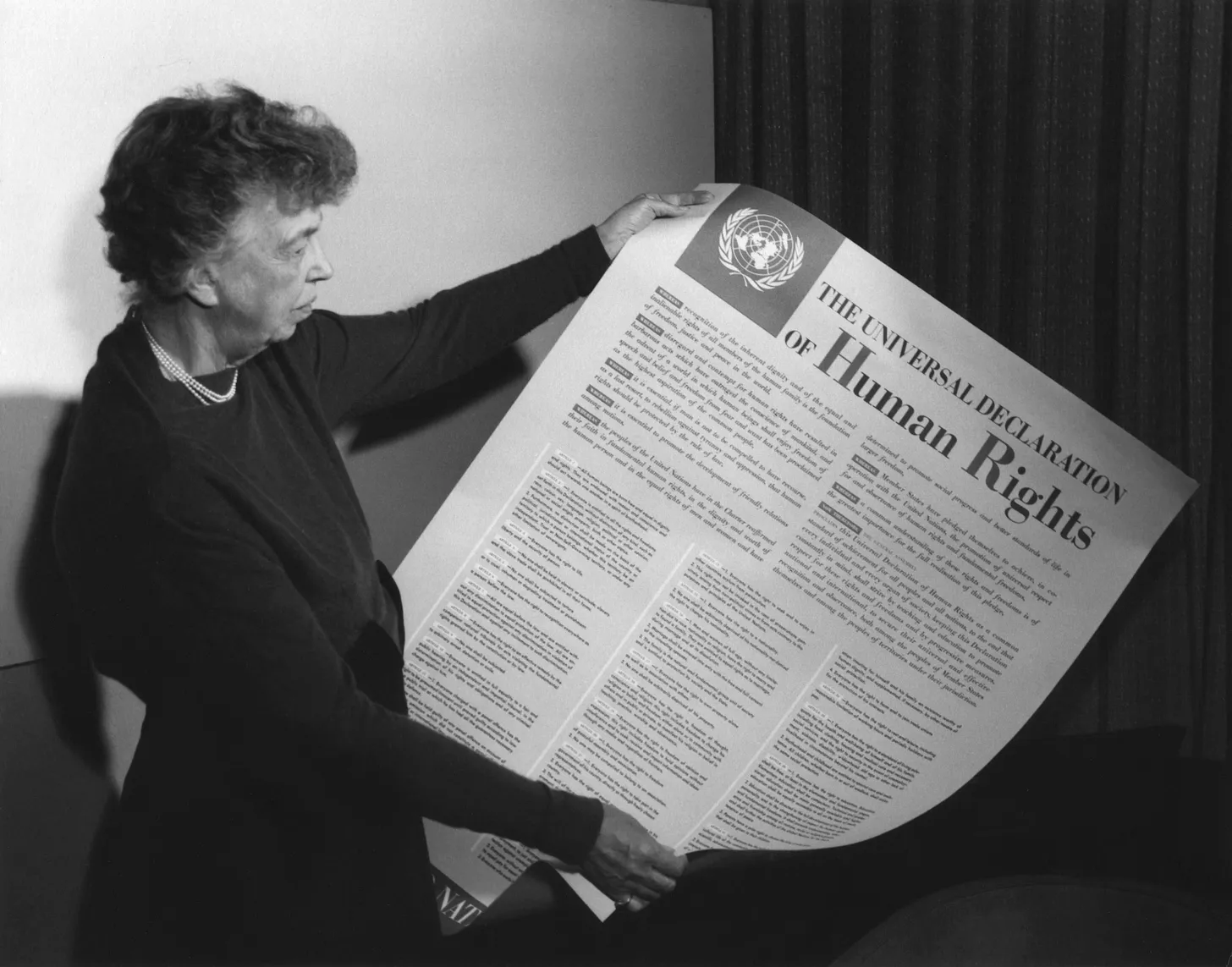
The United States of America is a fascinating case in world history. Unlike France, China, Netherlands, or India, the USA did not start first as a Kingdom or even as an identity, it started because of a common devotion to an idea that they did not view as limited to “being American.” Instead its founders were obsessed with an idea they viewed as universal: human rights.
Human rights are fundamental to American DNA.
To reject human rights is to reject the founding of America. When I ask students where human rights come from, it is fascinating to hear the answers and has shown me how little people understand about human rights. I hope that I can help clear up a few common human rights lies. 
Human Rights – Lie #1: Rights Come from Governments
Some people seem to think that human rights are gifts from kind (good) governments. This can be seen in well meaning assertions that people have a right to things like the internet, to education, and to water. Of course, these are good things, but good things does not mean things that the government is obligated to provide. Nor does it mean that they are human rights. First, let us look at marriage. Of course, even good countries like the United States do not have a spotless record on this. For example, it was illegal in several states for mixed race marriages to take place until the Loving Case (imagine the PR guy who realized that this was the case name) when the Supreme ruled those various state laws violated the constitution in 1967. For context, that is the year that Jason Statham, Faith Hill, Mark Ruffalo, and Joe Rogan were born. Of course it is wrong for the government to stop marriages based on race. But it is also the case that the government does not find you a spouse. The government’s role is not to help you find the love of your life, instead their role is to uphold your right to pursue happiness.  Second, let us examine the right to water (or food). What is the role of the government and of rights? First, I think that most people who agree that it is NOT the job of the mayor (or president, etc.) to find you and make you drink 16 oz of fresh spring water or to grill you a steak. Instead the role of the government is to protect your right to life and make sure that no one keeps you from grilling a steak or taking a drink of water. (This can take a wide range of forms based on specific local contexts.) Third, let us look at education. Every person should have the liberty to learn. No matter your age, race, economic limitations, your right to learn is tied to your liberty. The government should not be telling you that you cannot learn how to bake potatoes (like ChatGBT taught me for a Christmas party I recently hosted). The government should not keep anyone from going after a PHD in advanced engineering or gender studies. In the same way, it should not stop a 78 year old from finally getting the college education that she has dreamed about all this time. Why? Because we should have the ability to make our own choices for what we do in life. So, in that regard we have liberty to chase after knowledge that interests us and spend our time and effort (and money) on these things. However, that does not mean that it is a right that the government must provide. I don’t know if you noticed, but in my three examples, I used various topics to point from real world things that normal people (like you and me) need and deal with to point to what some examples of real rights at stake are: life, liberty, and the pursuit of happiness.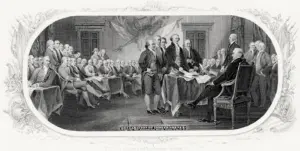
Human Rights – Lie #2: You Can Lose Your Human Rights
One of the reasons that I’m so emphatic about lie number 1 is because of how it leads to lie number 2. If rights are given by a government, that same government can take them away. If they are given by “the people” in a democratic vote, they can be revoked in the same way. If the right to freedom of conscience, for example, is a gift of a government, what happens when a Maoest dictatorship in China doesn’t agree: does that then mean that Chinese people no longer have that right? A human right doesn’t evaporate because the government doesn’t recognize it. Human rights are fundamental. They are the most true laws laid at the foundation of the universe. Like gravity, thermodynamics, and non-contradiction, they are true no matter what. I like how one of the greatest politicians in history put it. Cicero in the first century before Christ said:
“True law is right reason in agreement with Nature… We cannot be freed from its obligations by Senate or People… there will not be different laws at Rome and at Athens, or different laws now and in the future, but one eternal and unchangeable law will be valid for all nations and for all times, and there will be one master and one rule, that is God, over us all, for He is the author of this law, its promulgator, and its enforcing judge.” – Cicero
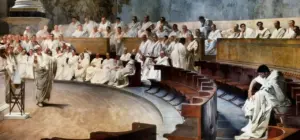 Cicero is saying that fundamental law might be difficult at times to find: we need to use “right reason” and to test our theories in the real world (in “agreement with nature”), but they are real and cannot be taken or only relevant in one era or place. They are things that we have because we are human. Maybe an example would be helpful. Take slavery in places like Virginia in the early 1800s. Many people were legally enslaved, legally forced into sexual relationships with their owners, and legally kept from reading the Bible. However, this is not because they didn’t have human rights, it means that the government of Virginia and held the power was a bad government because it didn’t recognize those human rights that were “endowed by our creator” to all people because they are people.
 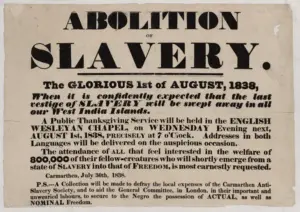 This is how we can correctly judge China’s human rights violations–for example. We can judge governments as better or worse by how well they line up on human rights. This is exactly because human rights belong to us because we are people, not because our government gave them to us.
Human rights are not dependent on where you are, or your race, gender, age, place of birth, or any other factor. Human rights are yours because you are human. They are yours and cannot be taken away, that’s what “unalienable” means.
As a Christian, it is exciting to see that even a pagan like Cicero could see this truth when he says that God “is the author of this law, its promulgator, and its enforcing judge.” I do not think it is an accident that even the staunch atheist defenders of human rights do so in the context of the Christian tradition of human rights and that the most impactful human rights campaigns in the wide scope of history–like the fight against slavery–had Christian doctrine as their moral backbone. (Maybe at some point I will do a post about the incredible legacy of Saint Gregory of Nyssa as the starting point of the movement for the abolition of slavery–would anyone be interested in that?) If human rights are endowed by our creator, then no human force has the right to take them away and anyone “senate or people” who tries to take them away, are denying fundamental truth and should be opposed.
Human Rights – Lie #3: Human Rights includes the 2nd Amendment
One of the confusing things in the United States is that we have two separate statements of rights, but few civics teachers seem to know how to draw the differences out in a helpful way. The Declaration of Independence is based on fundamental human rights (life, liberty, and the pursuit of happiness), and that these rights are “self-evident,” “unalienable,” and “endowed by the creator.”
“We hold these truths to be self-evident, that all men are created equal, that they are endowed by their Creator with certain unalienable Rights, that among these are Life, Liberty and the pursuit of Happiness. — That to secure these rights, Governments are instituted among Men, deriving their just powers from the consent of the governed…” – Declaration of Independence
This is an outstanding example of the proclamation of human rights. On the other hand, another document, the American Bill of Rights in the United States Constitution, lists many civil rights. Civil rights are rights that are like fences put up by governments to protect our human rights. They are not at the same level and there are always functional limits to them. While they are not absolute, they are the enforceable restrictions that governments put in place as legal ways to keep violations of human rights at bay.
Examples of civil rights include the right to vote, freedom of the press, freedom of speech, a right to a grand jury, no excessive fines, and the right to keep and bear arms.
Civil rights are key to protecting human rights. For example, the right to vote is a key way that countries project the right to liberty. As a civil right, voting has limits. It is limited to people above a certain age. A human right is something you have no matter your age. But this civil right protects the right of liberty by keeping the government in check–it has practical utility and limitations. Another favorite civil right among many Americans is the right to keep and bear arms. Of course, this has limits. We do not insist that it is right and legal to give a 5 year old a missile launcher. This isn’t a violation of the 5 year old’s human rights, it is a practical limit on the 2nd amendment. One way to look at the 2nd Amendment is that it is a civil right designed to protect the right to life. The right to life includes the right to self-defense. The right of self defense is supported by the right to be armed. So, the 2nd Amendment is a civil right (that does have practical limitations) designed to buttress the human right to life. 
3 Lies about Human Rights
These are 3 lies about human rights and how I’ve found it helpful to think about rights, and also engage people in a healthy way on the topic not only theoretically, but also practically. Human rights are a part of the DNA that makes up the United States of America. Of course, Americans are shifting on a lot of things in this tumultuous time. However, I hope that at the end of this crazy era we will find common ground that still zeros in on the rights that each person has because they are a person, not a privilege of being an American, a battering ram to attack America, or an antiquated idea. Stand against the lies, stand for “unalianable” human rights. Editor’s Note: This article was originally published on Jeremiah’s Substack and is republished here with permission. Visit his Substack to read more of his work and subscribe for updates.